
Home › Writing › Proofreading
What a spellchecker misses in a kitchen cabinet painting quote
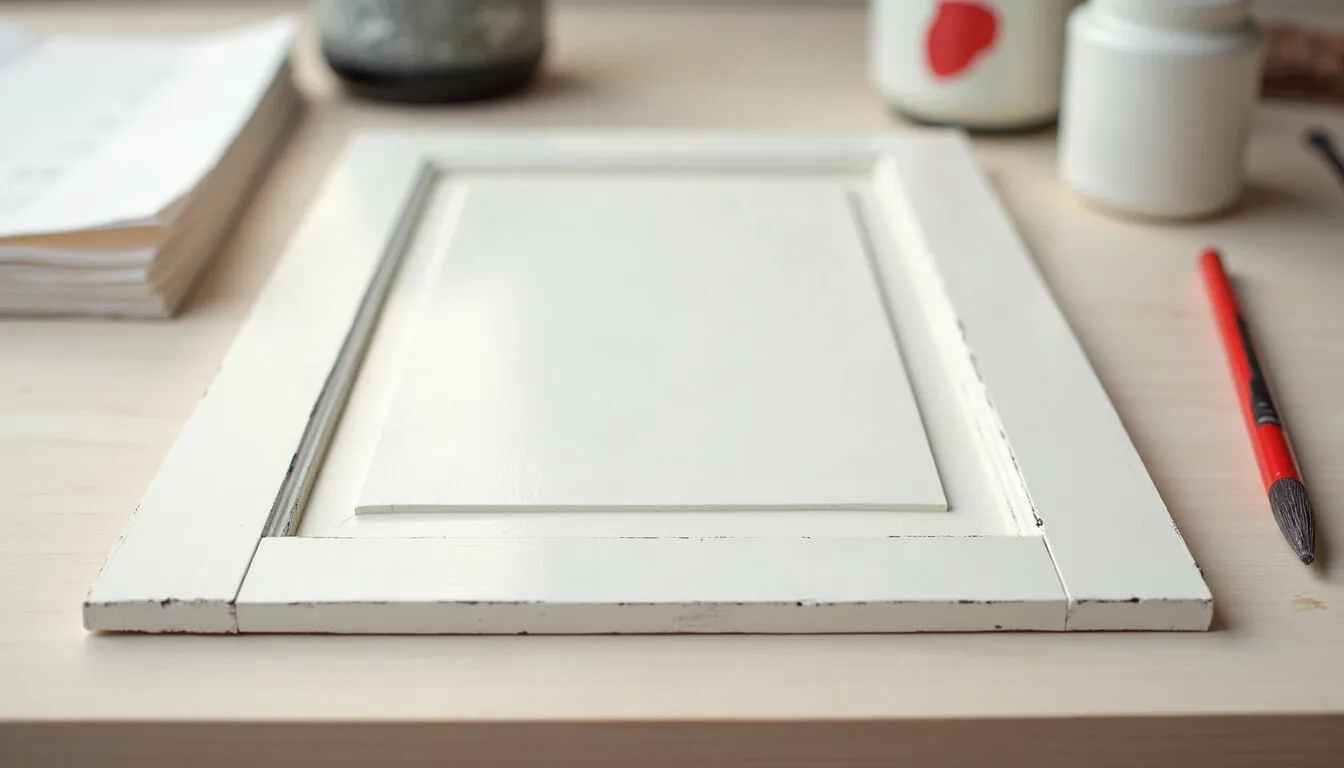
A quote for painting the kitchen cabinets lands in your inbox, and the spellchecker underlines nothing. Every word is spelled correctly. That proves very little: a spellchecker checks that words exist, not that they are the right words, and a cabinet quote is full of short, similar terms that mean quite different jobs. If you are in Colorado, a service page from cabinet painters Colorado Springs homeowners can look at is a handy way to learn that vocabulary before you read your own quote.
I spend a lot of time on the machine side of text: what a checker flags, what it lets through, and why. A painting quote is a neat test case. Below are four passes, each aimed at a kind of mistake that software is happy to ignore, plus a note on what happens when you copy the details into Japanese for someone else in the family.
First pass: what exactly is being painted?
Grammar tools judge sentences, not scope. "Paint all cabinets" is a perfectly good sentence. It is also a poor description of a job, because a kitchen cabinet is several surfaces: doors, with a front and a back; drawer fronts; the frames or boxes the doors hang on; sometimes the insides; sometimes the end panels that face the room. Hardware such as hinges and handles may come off, stay on, or be replaced. Each of those is a decision.
So the first pass is a reading for coverage. Go through the quote and list every surface it mentions. Then stand in the kitchen and list every surface you can see. The difference between the two lists is your set of questions.
Galley proof
Before: "Paint all cabinets."
After: "Paint upper and lower cabinet doors (both sides), drawer fronts and face frames; cabinet interiors not included; hinges and handles removed and refitted."
Why: the short version is grammatical and empty; the long one tells you what you are paying for and what you are not.
Things to look for on this pass:
- Doors: front only, or both sides?
- Drawer fronts, frames and end panels: named, or assumed?
- Interiors and shelves: in or out?
- Hardware: removed and refitted, left in place, or replaced (and if replaced, by whom)?
- Any island, pantry or bathroom units: part of this job or a separate one?
A good painter will usually walk you through these points anyway. The pass is there so you know which answers you still need in writing.
Second pass: words a spellchecker happily accepts
Here is where software is weakest. It catches "primmer" and lets "primer" through, which is fine. It also lets "stain" through when you meant "satin", and that is not fine at all. Satin is a sheen, a level of shine on a painted surface. Stain is a different kind of finish that soaks into wood rather than sitting on top of it. Autocorrect swaps these two with a cheerful lack of concern, and both words are spelled correctly.
The same goes for a handful of other pairs that turn up in renovation emails:
- satin and stain
- loose and lose ("lose hardware" is a sad sentence)
- coat and coast
- doors and door's
- sand and sanded, prime and primed, where the tense tells you whether a step is planned or already done
Galley proof
Before: "Finish: white, stain."
After: "Finish: white paint, satin sheen."
Why: both words are spelled correctly, and only one of them describes a painted cabinet; the checker cannot tell which you meant.
The fix is human and quite dull: read the key nouns out loud, one by one, and ask what each one means for the kitchen. If a word could belong to two different jobs, confirm which one in your reply.
Third pass: counts, dates and Japanese input
Now the numbers. How many doors, how many drawers, how many days the kitchen will be out of use, and when it starts. Count the doors yourself; it takes a minute and it is the single best check against a quote copied from a different kitchen. If the count is close but not exact, ask. It may be nothing, or it may be a set of doors above the fridge that nobody mentioned.
If you are passing the details to a parent or partner who reads Japanese more comfortably, you will probably type a short summary. This is where an IME, the input software that turns typed sounds into kanji, adds its own kind of error. Japanese has many words that share a reading, and the IME offers the most likely one, which is not always the right one.
Galley proof
Before: 扉は10枚異常 (tobira wa jūmai ijō, with 異常, "abnormal")
After: 扉は10枚以上 (tobira wa jūmai ijō, with 以上, "ten doors or more")
Why: the IME supplied the right sound and the wrong word; no checker will flag it because both are real words.
A note on 以上 itself while we are here: it includes the number it follows, so 10枚以上 means ten or more, not more than ten. That is exactly the kind of small difference that matters when you are comparing a count in a quote.
Two more machine slips to check before you send a summary:
- Full-width digits (10) typed by the IME instead of ordinary half-width ones (10). They look similar on screen but can behave oddly when pasted into a spreadsheet or an English email.
- Dates. Japanese order runs year, month, day, and a summary that mixes orders invites confusion. Write the month as a word in English or with 月 in Japanese.
Fourth pass: copy and paste in your own reply
The last pass is on your side of the conversation. Most of us write a request once and then reuse it, which saves time and carries mistakes from one job to the next. A paragraph pasted from an old email to a different trade, or from a request about a different room, sails straight past every tool you own.
Galley proof
Before: "As discussed on the phone, please quote for the bathroom."
After: "As discussed on the phone, please quote for the kitchen cabinets only; the bathroom vanity is not part of this job."
Why: the pasted line was correct once, for a different job; now it asks for the wrong quote in perfect English.
Before you send a reply, check the pieces most likely to have come from somewhere else:
- The greeting: right name, right company.
- The room and the surfaces: the ones in this quote, not the last one.
- The colour and finish words: copied from the quote itself rather than retyped.
- The dates you are available: this month, not the month you wrote the original.
- Your phone number and address: still current.
It also helps to quote the company's own wording when you reply about a detail. If the quote says "face frames", use "face frames" in your answer. Two people using one term for one thing is the simplest way to stop a question turning into a misunderstanding.
Colour names deserve the same care. A paint colour is usually identified by a name and a code from the maker, and both are easy to mistype. Don't retype them at all: copy them from the quote or from the sample you chose, then compare the copied text against the original one character at a time. A colour called something like "warm white" sits beside a dozen near neighbours, and a single wrong digit in a code can bring the wrong one.
Finally, keep the answers. A written reply to each question, saved in one thread with the quote, is worth more than a quick phone call that nobody can quote later. When a detail comes up on the day, you can find the sentence instead of trying to remember it.
The final read
If you only do one check, do this: stand in the kitchen with the quote in your hand and touch every surface it names, then every surface it doesn't. Software can't do that pass for you.
The spellchecker will keep saying everything is fine; that is its job, not yours.
More in the same section
Doubled particles and other keyboard slips in Japanese drafts
A doubled を, わ typed for は, 禁煙 turned into 記念: test yourself on eleven common keyboard slips in Japanese drafts, then use a quick search routine.
Go to the article ›
Hyōki yure: keeping spellings consistent across a long Japanese document
A step by step routine for hyōki yure: pick one spelling per word, write a style sheet, and search a long Japanese document without breaking it.
Open it ›
IME conversion errors: the henkan slips that spellcheck never sees
Why homophone slips like 以外 and 意外 or 保証 and 補償 survive every spellcheck, how IMEs cause them, and a routine for catching them in your Japanese drafts.
Read on ›