Typing Japanese: romaji or kana input, JIS or US layout, and IME settings
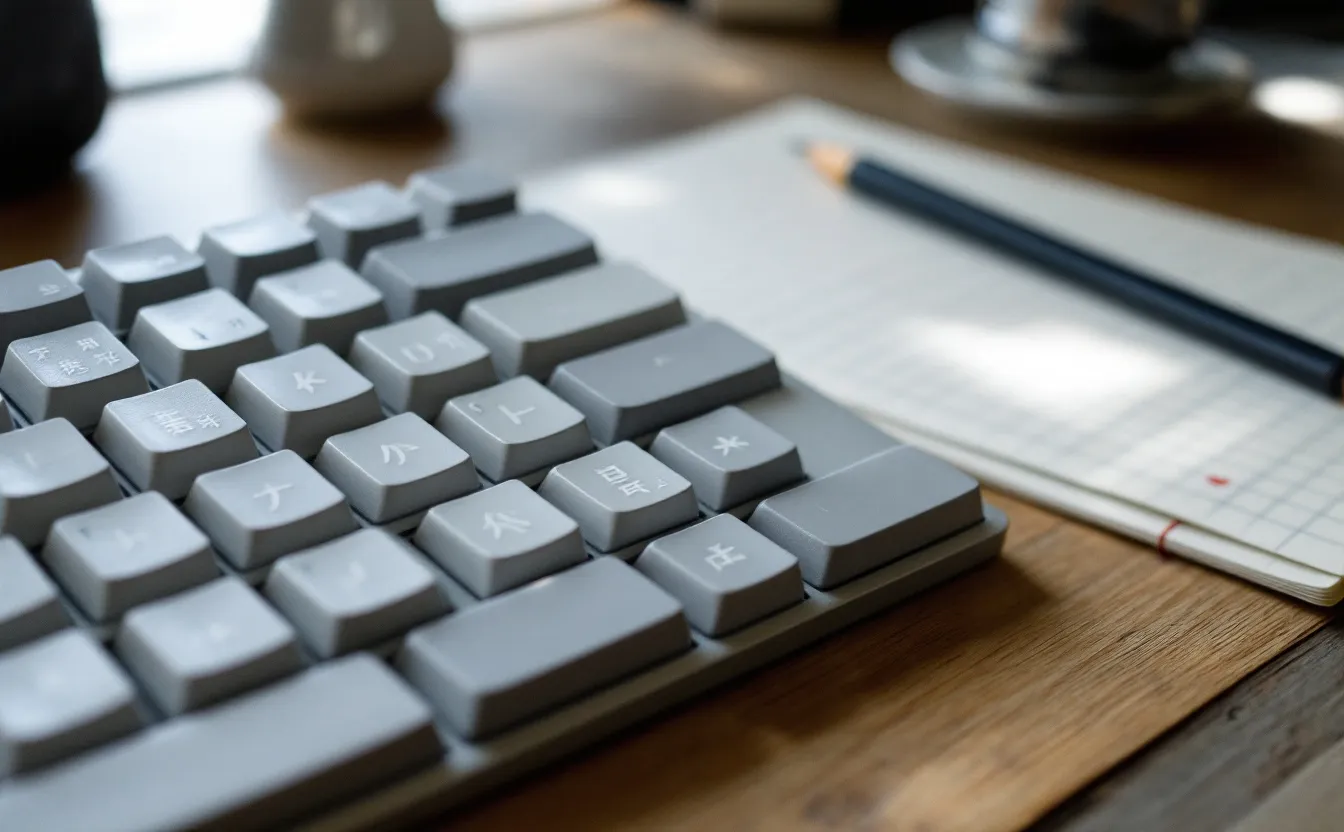
Romaji or kana input, a JIS or a US keyboard, and the IME settings that cut down on typing slips in Japanese text before they reach a proofreader.
Go to the article ›Check Japanese text before it goes out: a checker that runs in your browser, and notes on writing Japanese well.

Kenji covers the machine side of Japanese text: IME conversion, character sets, full-width and half-width forms, keyboards and the tools that show what a checker can and cannot catch.
Romaji or kana input, a JIS or a US keyboard, and the IME settings that cut down on typing slips in Japanese text before they reach a proofreader.
Go to the article ›Zenkaku and hankaku letters, digits, spaces and katakana: where the two widths come from, how to pick house rules, and search patterns to clean a draft.
Go to the article ›Why homophone slips like 以外 and 意外 or 保証 and 補償 survive every spellcheck, how IMEs cause them, and a routine for catching them in your Japanese drafts.
Read on ›