
Home › Writing › Writing Life
Read it twice: checking a tile request before you send it
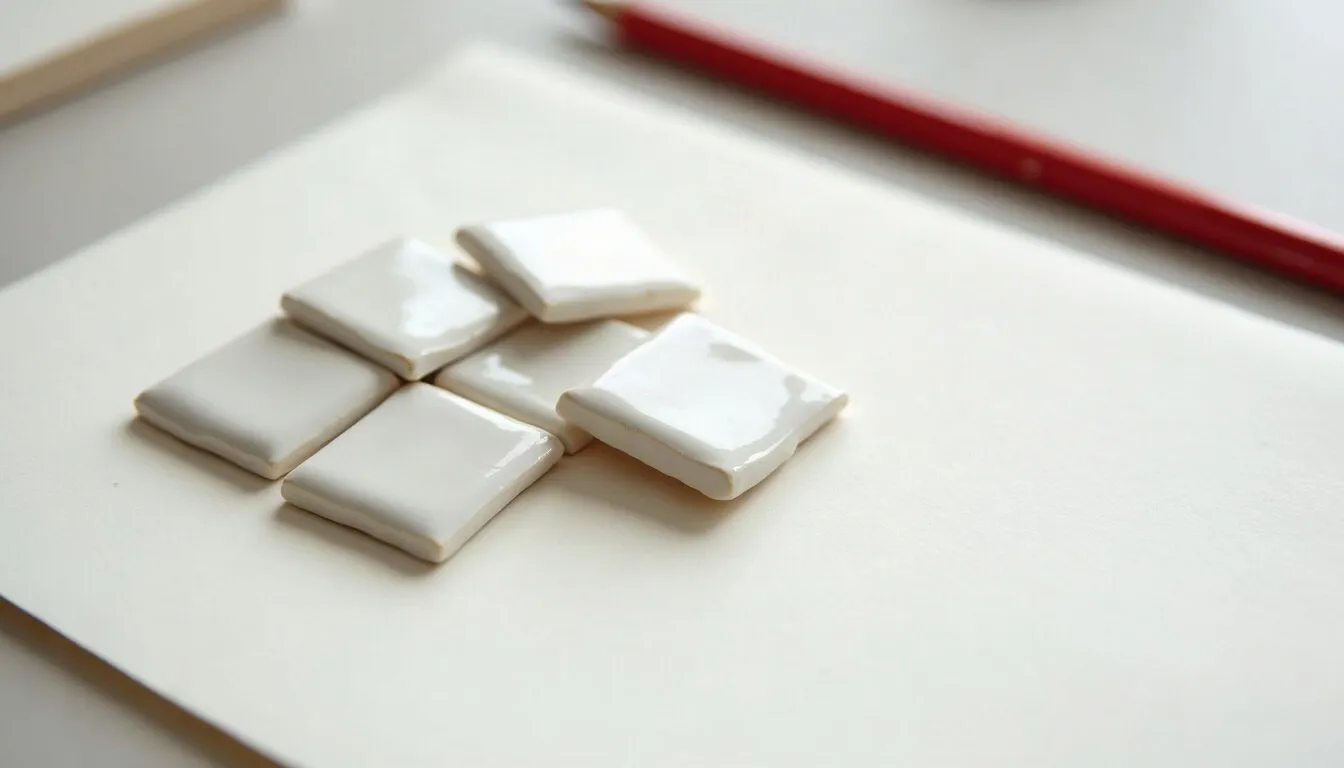
Picture a short email to a tile shop, drafted in English for a parent who reads Japanese far more comfortably. The kitchen is being redone, the backsplash is the one part everyone has an opinion about, and the email has to say which tile, which white and how much, without three rounds of follow-up questions. It looks finished.
Most of the trouble sits in a few words. If the tile in question is the zellige white tile that turns up in so many kitchen photos, the colour name alone can carry three meanings, and a handmade tile adds questions a factory tile never raises. Below I read a sample request and an order email the way I would read any draft before it goes out: in passes, one kind of mistake at a time.
First pass: does it say what you actually want?
Before I look at a single comma, I ask what the email is for. A request for samples and a request to place an order are different letters, and a surprising number of drafts try to be both.
So read the draft once and write down, in one line, what you want back. "Two or three samples of white tiles, posted to this address" is a clear goal. "Information about white tiles for our kitchen" is not, because the shop has to guess whether you want a catalogue, a price, a sample or a conversation.
Check that the draft names:
- the room and the surface (a kitchen backsplash behind the hob, say, rather than "the kitchen")
- the tile you are asking about, using the name on the shop's own page
- what you want sent or confirmed, and by when you need it
- who the reply should go to, if more than one person in the family is involved
In a bilingual household, that last point matters. If a parent owns the house and a son or daughter is writing on their behalf, say so in one plain sentence. It saves the shop from writing to the wrong person, and it saves you from translating a reply that was meant for someone else.
Galley proof
Before: "We are interested in your white tiles and would like some more information."
After: "Could you post samples of your white zellige for a kitchen backsplash? We would like to compare two shades before ordering."
Why: a request the reader can act on gets an answer; an expression of interest gets a brochure.
Second pass: colour words are not as plain as they look
This is the pass where I slow down most. "White" sounds like the least ambiguous word in any language, and in a tile email it is one of the slipperiest. Shops often sell more than one white, with names that hint at a warmer or cooler cast, and other shades such as cream sit close by. If your email just says "white", you have not chosen anything yet.
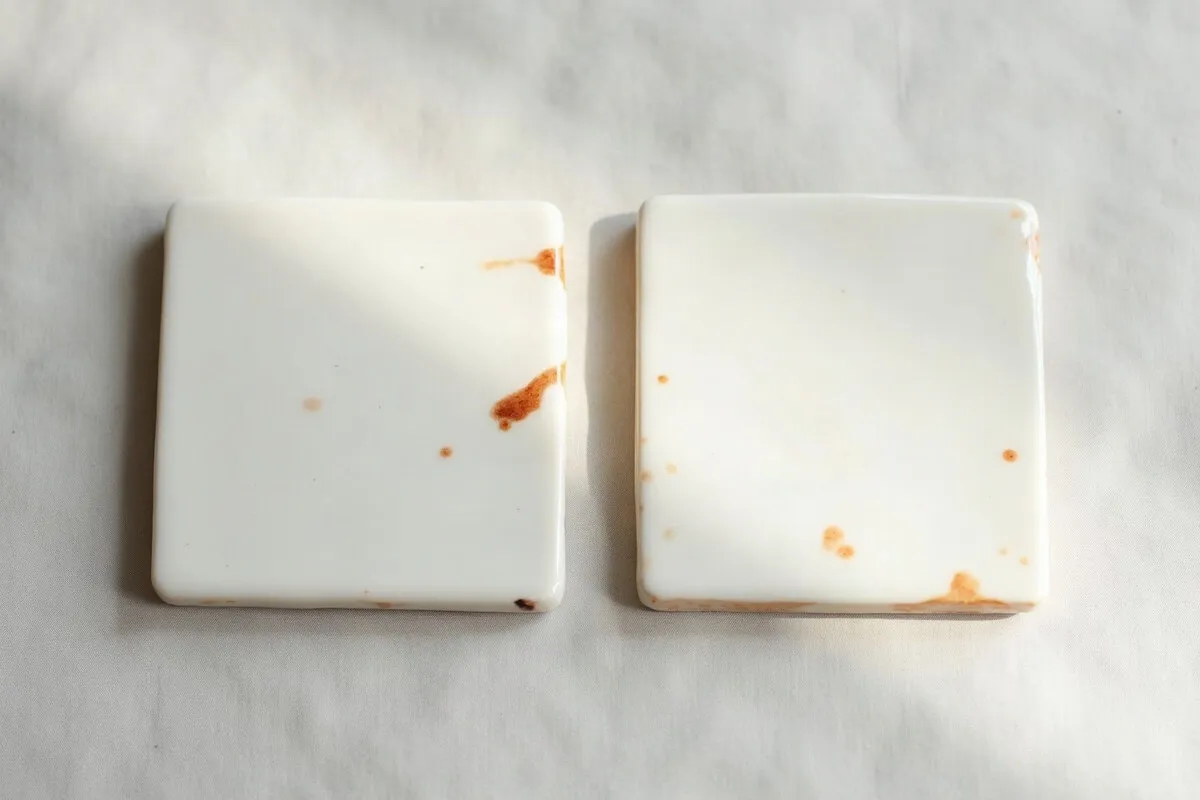
Zellige makes this harder in a good way. It is a handmade, glazed clay tile with an uneven surface, so each piece catches the light a little differently and the colour shifts from tile to tile. That variation is the point of buying it. It also means a single photo on a screen tells you less than it seems to, which is one reason people ask for samples and look at them in the actual room, morning and evening.
When the email has to work in Japanese too, the colour words multiply. Here is how I would compare the ones that tend to come up:
| Word | Reading | What it usually suggests |
|---|---|---|
| 白 | shiro | plain white, the general word |
| オフホワイト | ofu howaito | off-white, a softened white |
| 生成り | kinari | the natural shade of unbleached cloth, a warm, creamy white |
| クリーム色 | kurīmu iro | cream, clearly warmer than white |
None of these is a precise match for a product name in English, and I would not try to force one. The safer habit is to keep the shop's own colour name exactly as written, in its original spelling, and add a Japanese description in brackets for the family member who needs it. That way the name the shop recognises never gets lost in translation.
Galley proof
Before: 「白いタイルをお願いします。」 (Shiroi tairu o onegai shimasu, "White tiles, please.")
After: 「『Warm White』(生成りに近い白)のサンプルをお願いします。」 ("A sample of 'Warm White' (a white close to kinari), please.")
Why: keep the product's own name intact and describe it beside it, rather than replacing it with a word that only you understand.
Third pass: numbers, units and quantities
Now the details. This is where a careful learner's email can still go wrong, because numbers feel finished the moment you type them.
The first trap is units. If the house is in the US, the shop and the installer will most likely think in square feet. A family member used to Japanese conventions may think in square metres, often written 平米 (heibei) in everyday speech. The two are not interchangeable, and a figure copied from one person's note into another person's email without its unit is an order waiting to go wrong. Write the unit every single time, and if you converted it, say so.
The second trap is the gap between the area of the wall and the amount of tile to buy. With any tile, some pieces get cut and some break. With a handmade tile, you may also want spare pieces to choose from as you lay them, since the variation in shade and surface is part of the look. I am not the right person to say how much extra to allow; that is a question for the installer, and it belongs in the email to them before you write to the shop. What I can tell you is that "enough for the wall" is not a quantity.
Check these in every draft:
- every number has a unit next to it
- dimensions are written in the same order throughout (height then width, or width then height, but not both)
- any converted figure says what it was converted from
- dates are written so nobody can misread them; "the 3rd" is clearer than "3/4" when one reader grew up writing dates another way
- the tile size you mention matches the size on the shop's page, not a size you remember
Galley proof
Before: "The wall is about 4 by 2, so we need around 8."
After: "The backsplash area is 2.4 m wide by 0.6 m high (measured by our installer). Please confirm the quantity in square feet, including the extra the installer recommends."
Why: a number without a unit is a guess, and a guess in two measuring systems is two guesses.

Fourth pass: the tone of the request
This is my own favourite pass, because it is where I used to make the most rewrites. A request can be correct in every fact and still read as abrupt, or so tentative that the reader is not sure anything was asked.
In Japanese the difference shows up in the verb ending. 「送ってください」 (okutte kudasai, "please send") is polite and perfectly normal between people who know each other. For a first message to a business, or a message a parent will read and want to feel comfortable signing, 「お送りいただけますか」 (ookuri itadakemasu ka, "would you be able to send") sits better. It is not a rule that the first form is wrong; it is a matter of the relationship, and a first email to a shop is a fairly formal one.
English has its own version. "Send me samples" is a command. "I was wondering whether it might perhaps be possible to receive samples" buries the request so deep that a busy reader skims past it. Somewhere in the middle is a sentence that is polite and still obviously a question: "Could you send samples of these two shades?"
Two more things I check on the tone pass:
- the email does not mix styles halfway through, such as plain Japanese forms in one paragraph and keigo in the next
- thanks come once, at the end, rather than at the start of every sentence
Galley proof
Before: 「サンプルを送ってください。よろしく。」 (Sanpuru o okutte kudasai. Yoroshiku., "Send samples, please. Thanks.")
After: 「サンプルをお送りいただけますか。どうぞよろしくお願いいたします。」 ("Would you be able to send samples? Thank you very much in advance.")
Why: in a first message to a business, the more formal request reads as courtesy rather than distance.
When the reply arrives
The reply is a document too, and it deserves the same reading as your own draft. If you asked about one shade and the confirmation names another, that is the moment to say so, before anything is posted or charged. Compare the colour name, the tile size and the quantity in the reply against your email, line by line, and do it on paper or in two windows side by side rather than from memory.
If a family member is relying on your translation of the reply, translate the facts first (what, how many, when) and the courtesies last. Rendering every courtesy carefully and summarising the delivery date as "soon" is the wrong way round.
The final read
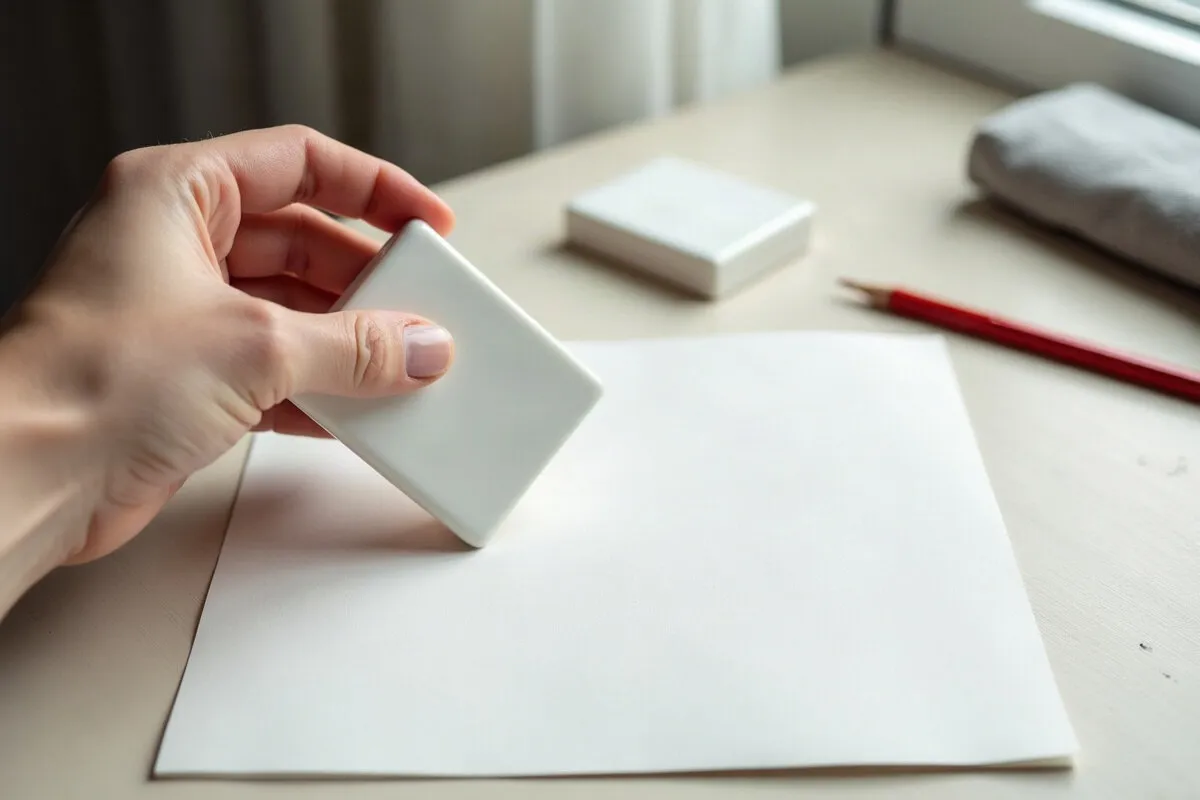
If you only have time for one more read, read the colour name and the quantity, and nothing else, out loud. Those two lines decide what arrives at the door, and they are the two most likely to have been copied, converted or softened along the way.
Then send it, and keep a copy where the whole family can find it.
More in the same section

A second reader for a message about mice in the attic
How to write and check a clear request to a pest control company, and translate the reply for a parent who reads Japanese more easily.
Read on ›
Reading aloud as a proofreading method for Japanese text
Reading a Japanese draft aloud catches doubled particles, broken rhythm and kanji with two readings that the eye slides past. Here is how to make it work.
Read the piece ›